
The Uncomfortable Truth: Why Starving Yourself Fails for Long-Term Results
“What if the key to managing body fat wasn’t in your gym, but in a microscopic ‘glitch’ that affects how your cells produce energy?”
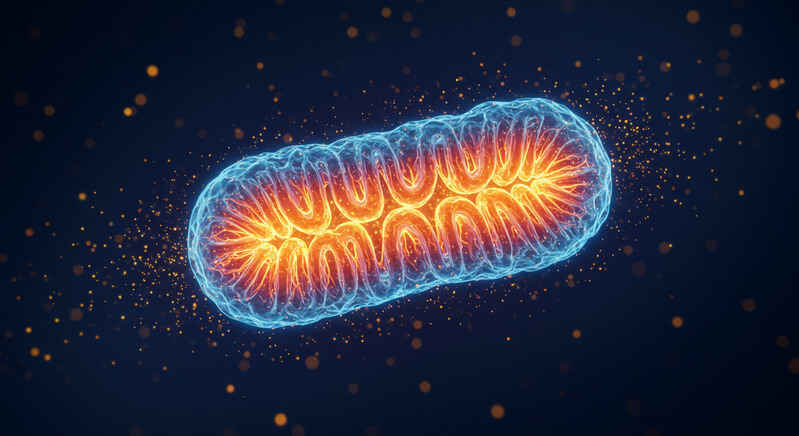
Discover Now The Secret of Mitrochrondia in Fat Management
Many people follow strict diets and rigorous exercise routines to the letter, only to end up frustrated with the mirror and the scale.
If this sounds familiar, understand that it might not be your fault.
The answer may not lie in obsessively counting calories, but in understanding what’s happening deep inside your cells.
What we often call a “slow metabolism” is frequently a metabolism that has become too efficient at one specific task: storing energy.
Decades of evolution have taught our bodies to save every extra calorie for times of scarcity.
But in today’s world, this same efficiency works against us, resulting in stubborn fat accumulation.
The Scientific Concept That's Changing the Game: Mitochondrial Uncoupling
Inside every one of the trillions of cells in your body are thousands of tiny “power plants” called mitochondria.
Their main job is to convert the food you eat into the energy your body uses for everything (the ATP molecule).
Now, imagine if these power plants had a “turbo mode” or a “heat-release mechanism.”
That, in simple terms, is mitochondrial uncoupling.
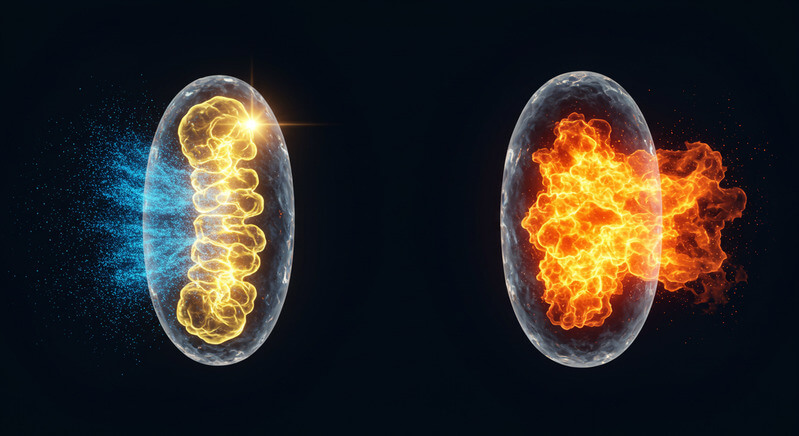
Think of it like a fireplace: Instead of all the wood (fat and sugar) being perfectly converted into stored energy, uncoupling allows some of that wood to be “burned” simply to generate heat.
The result? To produce the same amount of energy the body needs to function, the mitochondria are forced to find and burn more fuel (stored fat).
It’s a natural process that shifts the body from being an energy “saver” to an energy “spender.”
Resveratrol: The Natural Compound Allied with Mitochondrial Health
Nature is an incredible source of bioactive compounds. One of the most studied by modern science is Resveratrol, a polyphenol found in the skin of dark grapes, blueberries, and other plants.

Research from renowned institutions has explored the fascinating relationship between Resveratrol and mitochondrial health.
Studies suggest this compound may not only protect mitochondria from oxidative stress but also positively influence the pathways that regulate mitochondrial uncoupling.
By supporting the healthy function of these power plants, Resveratrol proves to be a great ally for those looking to optimize how their body manages its energy resources.
What Could Be Inhibiting This Natural Process in Your Body?
This efficient energy-burning mechanism can be sabotaged by modern lifestyle factors. Understanding these factors is the first step to turning things around.
Diets rich in processed carbohydrates: They flood the body with an “easy” energy source, discouraging mitochondria from burning stored fat.
A sedentary lifestyle: Lack of physical activity signals to the body that it doesn’t need to expend much energy, thus favoring storage.
Aging: As the years go by, mitochondrial function can naturally decline, making processes like uncoupling less efficient.
Chronic Stress: The stress hormone, cortisol, can negatively impact metabolism and cellular health.
Nature's Synergy: Combining Resveratrol with Other Powerful Nutrients
Understanding Resveratrol’s role in mitochondrial health is a huge step.
Now, imagine combining this compound’s potential with a smart selection of other ingredients studied for their positive impact on well-being and the body’s energy processes.
That’s exactly what a team of researchers did when they developed an innovative formula.
They created a complex that unites Resveratrol with a suite of high-purity nutrients…

…where each one plays a supporting role:
- Fucoxanthin & Green Tea Powder: Algae and leaf extracts known for their rich concentration of antioxidants, which support a healthy metabolic environment.
- Panax Ginseng & Beetroot Powder: Roots traditionally used to support vitality and energy levels.
- Milk Thistle & Taraxacum: Herbs that assist in the body’s natural detoxification processes, which are essential for proper metabolic function.
- Citrus Pectin & Hibiscus Powder: Fibers and floral extracts that contribute to digestive health and overall balance.
- Bioperine®: A patented black pepper extract, clinically studied for its ability to increase the bioavailability and absorption of the other nutrients, ensuring you get the most out of every component in the formula.
Instead of seeking out each of these ingredients separately, there is now a simple and safe way to access this synergistic combination, designed to give your body the support it needs.
Discover The Ikaria Juice and Take The Next Step
If you’re ready to move beyond theory and discover a product that embodies this advanced scientific vision, we invite you to learn about the complete formula.
Click the button below to see in detail how the combination of these ingredients can offer the support you’re looking for to optimize your energy processes and your wellness journey.

Disclaimer: The information provided on this website is for informational purposes only and is not intended as a substitute for advice from your physician or other health care professional. You should not use the information on this site for diagnosis or treatment of any health problem. Always consult with a healthcare professional before starting any new diet, exercise, or supplementation program.
Affiliate Disclosure: This post contains affiliate links. If you purchase a product through one of our links, we may receive a commission at no extra cost to you. This helps us continue to provide valuable content.